
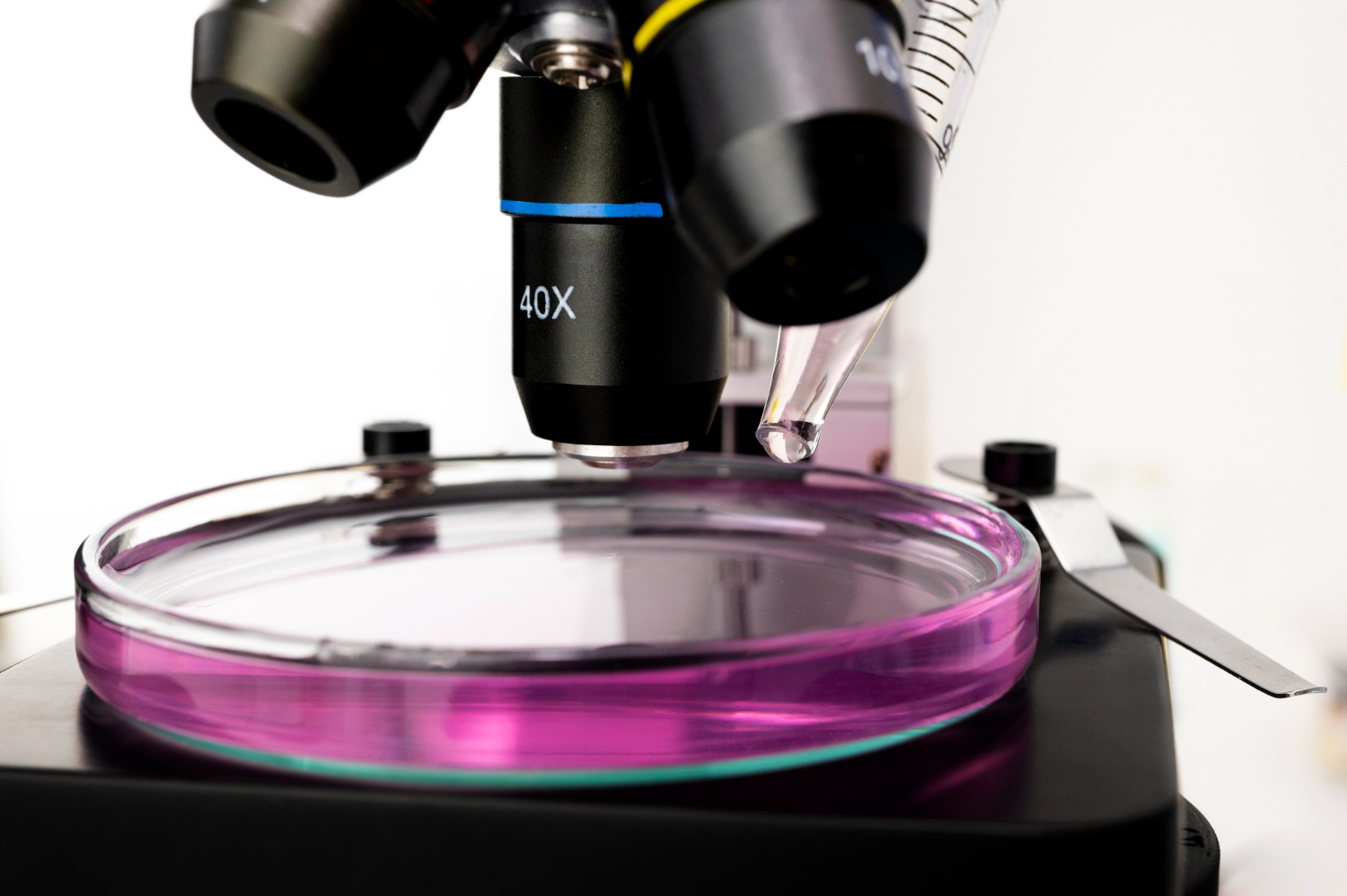
Material science advances when observation meets precision. In laboratories across research institutions, petrochemical facilities, and polymer development centres, scientists face a persistent challenge: understanding how materials behave under thermal stress whilst simultaneously observing their microscopic structure.
Traditional thermal analysis techniques like Differential Scanning Calorimetry (DSC) provide quantitative data on heat flow and phase transitions, yet they cannot reveal the morphological changes occurring at the microscopic level. Hot Stage Microscopy (HSM) bridges this critical gap, offering researchers simultaneous visual and thermal characterisation that transforms how we understand polymer crystallization, wax network formation, and material degradation.
Hot stage microscopy represents the convergence of optical microscopy and controlled thermal environments, enabling scientists to study material behaviour as a function of temperature with micron-level spatial resolution and 0.1°C temperature stability. This technique has become indispensable in polymer science, petrochemical research, pharmaceutical development, and materials engineering, where understanding the relationship between processing conditions and final material properties determines product performance and commercial viability.
The Science of Real-Time Thermal Observation
Hot stage microscopy operates by mounting a temperature-controlled stage beneath a standard optical microscope, allowing continuous observation of sample morphology whilst subjecting materials to precisely controlled heating and cooling programs.
This integration enables researchers to correlate visual changes with specific thermal events, creating a comprehensive understanding of material behaviour that neither technique achieves independently.
The fundamental principle underlying HSM involves studying optical properties as a function of temperature. Materials exhibit distinct optical characteristics during phase transitions: crystalline regions display birefringence under polarised light, amorphous regions appear dark, and the boundary between phases becomes visually distinct.
Polarised light microscopy combined with hot stage capabilities reveals crystalline structures through their interaction with polarised illumination. Semi-crystalline polymers like polyethylene terephthalate (PET) and linear low-density polyethylene (LLDPE) display characteristic Maltese cross patterns when spherulites form during crystallization.
Key technical specifications that define modern hot stage performance include:
- Temperature stability: ±0.1°C ensures accurate observation of transient thermal events
- Heating rate control: 0.1°C/min to 100°C/min accommodates diverse experimental protocols
- Spatial resolution: Below 1 micron enables observation of individual crystal nucleation sites
- Temperature uniformity: ±0.5°C across 20mm diameter prevents thermal gradient artifacts
Bridging Visual Observation with Quantitative Thermal Data
Researchers routinely combine hot stage microscopy with differential scanning calorimetry to create complementary datasets that enhance material characterisation. DSC quantifies the enthalpy changes during phase transitions, providing precise measurements of melting points and crystallization temperatures.
However, DSC cannot explain why two polymers with identical DSC thermograms exhibit different mechanical properties. Hot stage microscopy answers this question by revealing morphological differences: spherulite size distribution, crystal perfection, and phase separation patterns that DSC cannot detect.
When DSC indicates a melting endotherm at 265°C for PET, hot stage microscopy simultaneously shows the progressive disappearance of birefringent spherulites, confirming that the thermal event corresponds to crystalline melting. This visual validation prevents misinterpretation of complex thermograms where multiple thermal events overlap.
Decoupling Polymer Morphology: Crystallization and Phase Changes
Semi-crystalline polymers undergo complex morphological transformations during solidification from the melt, where crystal nucleation, growth, and impingement determine final material properties. Hot stage microscopy provides the only direct method for observing these processes in real time, enabling researchers to optimise processing conditions and predict performance characteristics.
Polyethylene terephthalate represents a commercially significant polymer where crystallization behaviour directly influences bottle clarity, barrier properties, and mechanical strength.
During cooling from the melt, PET exhibits a characteristic glass transition around 78°C before crystallization initiates at lower temperatures. The spherulite growth rate in PET varies with crystallization temperature, reaching maximum values around 180°C where molecular mobility and thermodynamic driving force balance optimally.
Critical morphological differences between common polymers:
- PET spherulites: 50-150 microns diameter, slower crystallization kinetics, higher transparency potential
- LLDPE spherulites: 10-50 microns diameter, faster crystallization, inherently translucent appearance
- Polypropylene spherulites: 20-80 microns diameter, intermediate crystallization rates
Isothermal Crystallization Kinetics and Spherulite Impingement
Isothermal crystallization studies involve cooling molten polymer to a specific temperature and observing crystal development whilst maintaining constant thermal conditions.
During isothermal crystallization, spherulites nucleate at random locations and grow radially at constant rates until they contact neighbouring spherulites. The point of spherulite impingement marks a critical transition where further growth becomes constrained, and remaining amorphous material becomes trapped in inter-spherulitic regions.
Hot stage microscopy captures this impingement process, revealing how nucleation density affects final morphology. High nucleation densities produce fine-grained structures with numerous small spherulites, whilst low nucleation densities yield coarse-grained structures. These observations enable refinement of kinetic models and improve predictions of crystallinity development during industrial processing.
The Coalescence Point: Redefining Wax Stability in Industrial Fluids
Wax precipitation in crude oils and petroleum distillates represents a critical challenge in upstream production, pipeline transport, and refining operations. As temperature decreases, dissolved paraffin waxes precipitate as solid crystals that can aggregate into networks capable of gelling entire fluid volumes.
Hot stage microscopy enables direct observation of wax crystallization processes, revealing the mechanisms by which dispersed crystals transform into problematic gel structures.
The wax evolution point defines the temperature at which the first wax crystals become microscopically visible during controlled cooling.
At this temperature, dissolved paraffins reach supersaturation and nucleate as discrete crystallites. As temperature continues decreasing, individual wax crystals grow larger and their concentration increases. The relationship between cooling rate and crystal size distribution directly influences subsequent network formation and gel strength.
Three-Dimensional Wax Crystal Network Formation
The coalescence point represents the critical temperature at which dispersed wax crystals interconnect to form a continuous three-dimensional network spanning the fluid volume. This transition fundamentally changes fluid behaviour: below the coalescence point, the material behaves as a porous medium rather than a liquid, with dramatic increases in apparent viscosity and yield stress that can halt pipeline flow.
Key parameters in wax coalescence analysis:
- Temperature window: 5°C to 15°C difference between wax evolution and coalescence points
- Crystal morphology: Plate-like structures interconnect more readily than compact forms
- Network topology: Three-dimensional branching structures captured through time-lapse imaging
Understanding coalescence mechanisms enables development of chemical additives that disrupt network formation. Hot stage microscopy provides the visual evidence necessary to evaluate additive effectiveness, showing whether treated fluids maintain dispersed crystal structures at temperatures where untreated samples gel completely.
Synergistic Analysis: Integrating HSM with DSC and Mass Spectrometry
Modern material characterisation increasingly employs hyphenated techniques that combine multiple analytical methods to extract complementary information from single experiments. The combination of HSM and DSC represents the most common hyphenated approach, where researchers observe samples under the microscope whilst simultaneously measuring heat flow.
Direct Analysis in Real-Time Mass Spectrometry (DART-MS) combined with hot stage microscopy enables detection of volatile oligomers and degradation products released during thermal processing.
Multi-Modal Data Integration for Comprehensive Material Understanding
The following table summarises key thermal transitions observed in common polymers using combined HSM-DSC analysis:
Polymer Type | Glass Transition (°C) | Crystallization Temperature (°C) | Melting Point (°C) | Spherulite Size Range (µm) |
PET | 78 | 160-200 | 265 | 50-150 |
LLDPE | -125 | 95-110 | 125 | 10-50 |
Polypropylene | -10 | 110-130 | 165 | 20-80 |
Nylon 6 | 50 | 180-200 | 220 | 30-100 |
This integrated data enables researchers to predict how processing conditions affect final material microstructure and properties. Multi-modal analysis becomes essential when studying complex systems like polymer blends, nanocomposites, or materials containing multiple additives.
Precision Thermal Control in Modern Research
Hot stage microscopy has transformed material characterisation by enabling simultaneous visual and thermal analysis of polymers, waxes, and complex formulations. The technique’s ability to reveal real-time morphological changes during controlled thermal programs provides insights unattainable through conventional analytical methods, supporting development of advanced materials and optimised processing conditions across multiple industries.
For research institutions seeking to implement hot stage microscopy capabilities, equipment selection critically influences experimental success. Systems must provide temperature stability within ±0.1°C, uniform heating across the sample area, and seamless integration with existing microscopy platforms.
Hexon Instruments, a leading microscopic hot stage manufacturer in India, addresses these requirements through the RHX Series hot stage systems. The RHX 125 (-40 to 125 °C) and RHX 300, RHX 400 , RHX 500 , RHX 600 models provide temperature ranges from ambient to 600°C with precise control. Hexon also provide customised stage with 1000 °C, depending on sample size.
As a trusted hot stage exporter from India, Hexon Instruments combines international performance standards with cost-effective manufacturing, making advanced thermal microscopy accessible to research institutions throughout India. With competitive pricing and comprehensive technical support, Hexon provides the Indian research community access to capabilities previously requiring foreign equipment procurement.
Research institutions and industrial laboratories seeking to enhance material characterisation capabilities through hot stage microscopy can contact Hexon Instruments for custom thermal analysis solutions tailored to specific research requirements.
Our technical team provides consultation on system configuration, application development, and integration with existing analytical infrastructure. Reach out today to discuss how the RHX Series can support your polymer research, wax characterisation, or advanced material development programs with precision thermal control manufactured in India.