
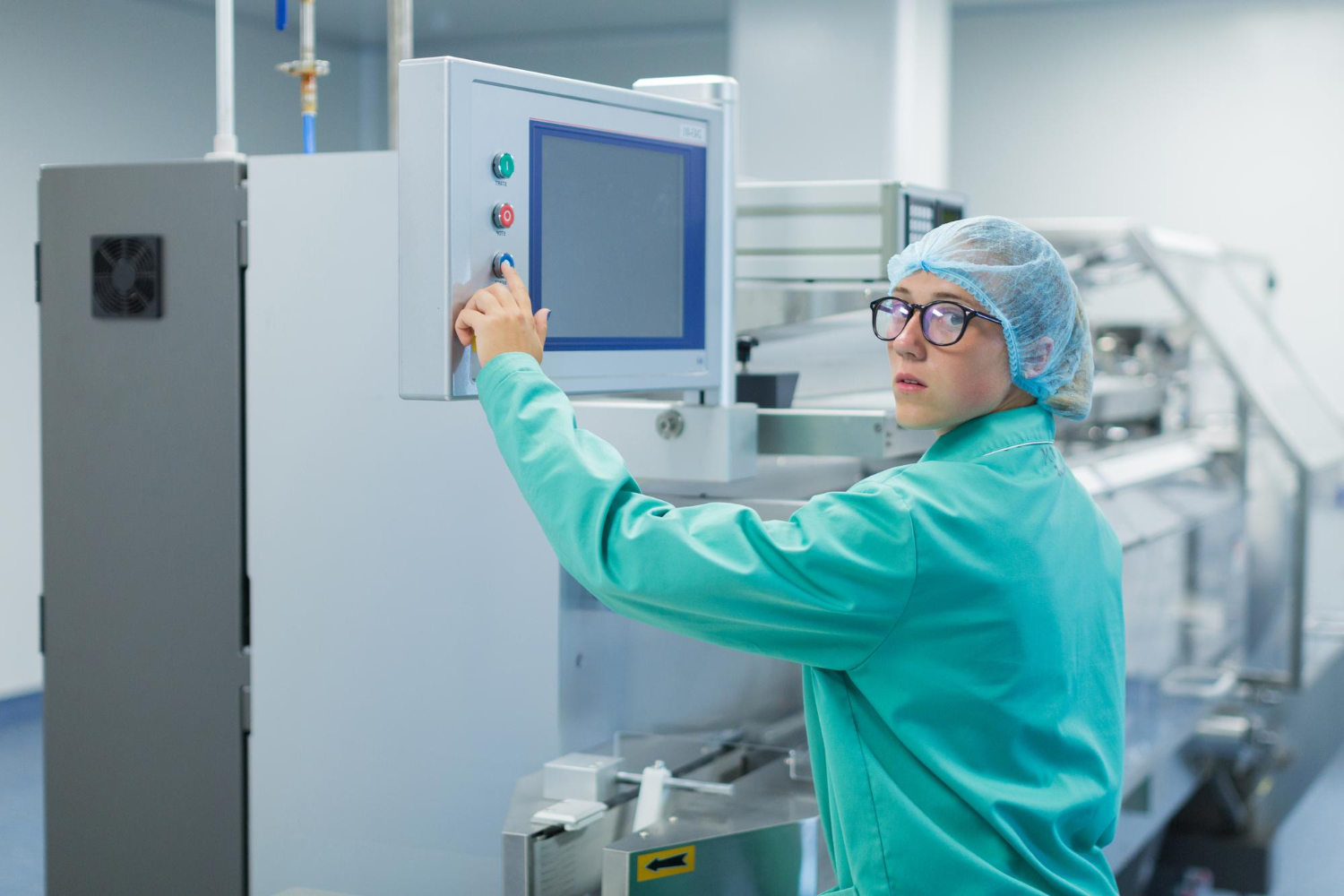
Research infrastructure in India stands at a pivotal moment. Across Bengaluru’s biotech hubs, Hyderabad’s pharmaceutical clusters, and the emerging semiconductor facilities in Gujarat and Karnataka, laboratory directors face mounting pressure to deliver faster research outcomes whilst maintaining stringent quality standards.
The equipment they choose today determines whether their institutions remain competitive in 2026 and beyond. Traditional laboratory instruments designed for general-purpose applications no longer satisfy the demands of advanced materials research, biopharmaceutical development, or semiconductor process control where micron-level precision and thermal stability measured in hundredths of a degree separate success from costly failures.
As we examine India’s laboratory equipment landscape in 2026, three dominant trends emerge:
- the migration toward ultra-precise thermal management systems,
- the widespread adoption of automated inspection platforms that eliminate human variability, and
- the accelerating shift toward domestically manufactured equipment that meets international performance standards whilst offering superior cost-efficiency.
The Shift Toward Ultra-Precise Thermal Stability in Pharma R&D
Indian pharmaceutical and biopharmaceutical laboratories increasingly demand cooling systems delivering ±0.02°C precision to manage exothermic synthesis reactions and maintain protein integrity in bioreactors, where even minor temperature deviations trigger product degradation or batch rejection.
The pharmaceutical sector’s evolution from generic manufacturing into biologics, biosimilars, and novel therapeutics has created thermal control requirements that conventional cooling equipment cannot satisfy.
Temperature-sensitive API synthesis represents a critical application driving this precision requirement. When process chemists synthesise complex molecules involving organometallic catalysts or highly reactive intermediates, exothermic heat generation can spike rapidly during reagent additions.
Without immediate heat removal maintaining reaction temperatures within ±0.02°C, side reactions initiate that reduce yields from acceptable 85 percent levels to commercially unviable 60 percent or lower.
Bioreactor Thermal Management for Protein-Based Therapeutics
Biopharmaceutical production presents equally demanding thermal challenges. Mammalian cell cultures producing monoclonal antibodies for cancer treatment or autoimmune therapies operate within narrow temperature windows around 36-37°C.
In large-scale bioreactors holding 1000 litres of culture medium, metabolic heat loads fluctuate throughout fermentation cycles. PID algorithm control systems integrated into modern laboratory chillers respond to these dynamic heat loads within seconds, maintaining the ±0.1°C stability that preserves cell viability and product titre.
Regulatory Compliance and c-GMP Requirements
The regulatory environment reinforces these precision requirements.
c-GMP compliance under CDSCO guidelines and ICH Q7 standards for API manufacturing explicitly addresses equipment qualification and process validation, including demonstration of thermal control capabilities. Laboratory chillers lacking documented ±0.1°C stability cannot generate the evidence regulatory authorities demand.
Automation in Micro-Inspection: From Image Stitching to Wafer Defect Mapping
Motorized XY stages with sub-micron resolution reaching 0.6 µm automate panoramic imaging and defect detection in semiconductor wafer inspection and metallurgical analysis, eliminating operator fatigue and positional artifacts whilst enabling repeatable measurements impossible with manual microscopy.
India’s semiconductor manufacturing ambitions under the India Semiconductor Mission have created urgent demand for precision inspection equipment capable of detecting nanometre-scale defects across 300mm silicon wafers.
Manual microscopy imposes fundamental limitations that automation eliminates. When research scientists manually position samples under microscopes, achieving positional repeatability better than 10-20 micrometres becomes challenging even with experienced operators.
Automated motorized stages with ±5µm mechanical accuracy return to programmed coordinates reliably across hundreds of cycles, enabling longitudinal studies tracking crystal growth, phase transformations, or degradation processes.
Large-Area Image Stitching for Metallurgical Analysis
Image stitching for large-area sample characterisation demonstrates automation’s transformative impact. Metallurgical laboratories examining grain structures across 100mm diameter specimens would require capturing and manually aligning hundreds of individual microscope fields.
Automated systems with 300x300mm travel ranges execute programmed scanning patterns capturing overlapping images that software algorithms stitch into seamless panoramas within minutes.
Semiconductor Wafer Defect Detection Systems
Semiconductor wafer inspection exemplifies automation’s critical role in emerging Indian manufacturing sectors. Detecting defects like particle contamination, line breaks, or shorts on silicon wafers requires systematic scanning across entire wafer surfaces.
Automated optical inspection systems integrating motorized stages with AI-driven defect detection algorithms process 200mm wafers in 15-20 minutes compared to hours required for manual inspection, whilst achieving defect detection sensitivities below 1 micrometre.
The Make in India Movement: Import-Independent High-Precision Engineering
Indian research institutions increasingly select domestically manufactured laboratory equipment meeting international performance standards including ICH guidelines and ISO specifications whilst offering 30-40 percent cost advantages compared to imported alternatives when accounting for pricing, reduced lead times, and elimination of import duties. This procurement shift reflects both economic pragmatism and strategic alignment with national self-reliance objectives.
The financial advantages of domestic sourcing extend beyond purchase price. A precision laboratory chiller from European manufacturers might cost INR 8-12 lakh after import duties, shipping, and currency conversion, with lead times extending 4-6 months.
Equivalent domestic equipment priced at INR 5-7 lakh arrives within 4-6 weeks, accelerating research timelines whilst preserving capital budgets.
Performance parity between domestic and imported equipment has improved dramatically as Indian manufacturers adopt advanced control systems, precision mechanical components, and rigorous quality management.
Temperature stability specifications of ±0.1°C and positioning accuracies of ±5 micrometres now represent achievable standards for Indian-manufactured instruments. Third-party validation through NABL-accredited calibration laboratories confirms these specifications.
Localized Technical Support and Rapid Response
The after-sales support advantage deserves particular emphasis. When critical equipment fails during time-sensitive experiments, response time determines whether disruptions last hours or weeks.
Domestic manufacturers with service teams based in major research hubs can dispatch technicians within 24-48 hours compared to week-plus timelines typical for international vendors.
Sustainability and Energy Efficiency: The Impact of Tighter BEE Norms
The Bureau of Energy Efficiency’s progressive tightening of appliance efficiency standards and the phase-down of high-GWP refrigerants under the Kigali Amendment drive laboratory equipment evolution toward low-GWP alternatives like R-32 and R-290 whilst integrating IoT-enabled monitoring for real-time energy optimization. Environmental regulations increasingly shape equipment design in ways that benefit operational economics and institutional sustainability goals.
Refrigerant Transition to Low-GWP Alternatives
Refrigerant transitions present immediate technical challenges. Traditional R-404A and R-507A refrigerants face phase-out schedules that will restrict availability and escalate prices.
Equipment purchased in 2026 must accommodate low-GWP refrigerants with global warming potentials below 150 to ensure 10-15 year operational lifespans without costly retrofits.
Operational Cost Reduction Through Energy-Efficient Design
Energy efficiency directly affects operational costs in facilities running multiple chillers and analytical instruments continuously. A typical pharmaceutical R&D laboratory operating four 5kW chillers continuously consumes approximately 175,000 kWh annually. At average industrial electricity rates around INR 8 per kWh, this represents around INR 14 lakh annual energy costs. Equipment featuring high-efficiency compressors can reduce consumption by 20-25 percent, generating INR 2.8-3.5 lakh yearly savings.
IoT Integration for Predictive Maintenance
IoT integration enables predictive maintenance and performance optimization. Sensors monitoring coolant flow rates, pressure differentials, and compressor cycling patterns transmit data to cloud platforms where analytics algorithms identify performance degradation before failures occur.
Technical Comparison: Manual vs. Automated Laboratory Workflows
The transition from manual microscopy to automated optical inspection represents a fundamental workflow transformation with measurable impacts on throughput, data quality, and operator requirements.
Parameter | Manual Microscopy | Automated Optical Inspection (AOI) |
Throughput (200mm wafer) | 4-6 hours per sample | 15-20 minutes per sample |
Positional Repeatability | ±10-20 µm (operator dependent) | ±2 µm (system guaranteed) |
Defect Detection Sensitivity | 5-10 µm (visual limit) | <1 µm (AI-enhanced detection) |
Data Traceability | Manual logging, prone to errors | Automated with coordinates and timestamps |
Operator Fatigue Impact | Significant after 2-3 hours | Eliminated through automation |
This comparison reveals that whilst automated systems require higher initial capital investment, the productivity gains and data quality improvements generate returns that justify costs for facilities processing significant sample volumes or requiring stringent documentation standards.
The Future of Indian R&D Infrastructure
India’s laboratory equipment landscape in 2026 reflects the research sector’s maturation from cost-driven procurement toward value-based decisions prioritising precision, automation, and long-term operational efficiency. The trends examined throughout this analysis demonstrate that Indian institutions increasingly recognise that equipment quality directly determines research output quality, regulatory compliance capability, and competitive positioning.
Hexon Instruments Private Limited, based in Navi Mumbai, directly supports these 2026 and beyond infrastructure trends through precision-engineered solutions including the Smart Chillex Series for pharmaceutical thermal management and the RHX Series hot stages for materials characterization. Aligned with the Make in India vision, Hexon delivers international performance standards at domestic cost structures with 24/7 after-sales support and comprehensive technical consultation addressing the complete lifecycle needs of research institutions.