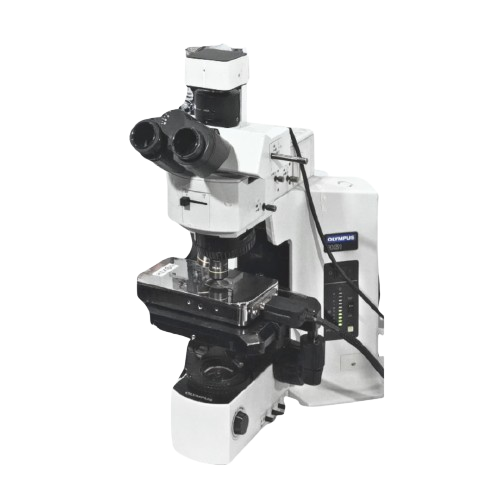
Hot Stage for Microscope
Precision Hot Stages for Microscopy & Thermal Analysis
01
02
Microscope Hot Stage Manufacturer in India
As a dedicated microscope hot stage manufacturer in India, we understand the practical challenges faced by lab users.
Limited bench space, vibration sensitivity, and long observation sessions are common realities. Our hot stages are compact, rigid, and easy to mount on standard microscopes without disturbing optical alignment.
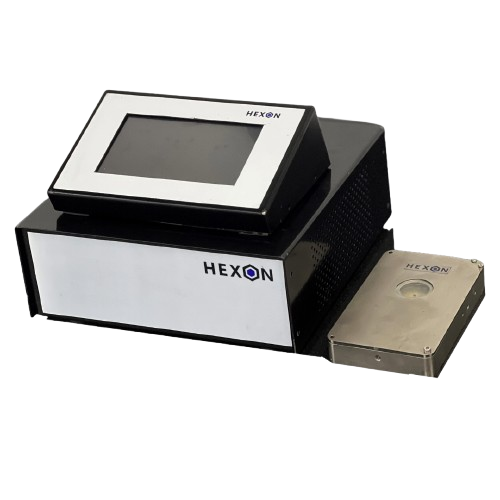
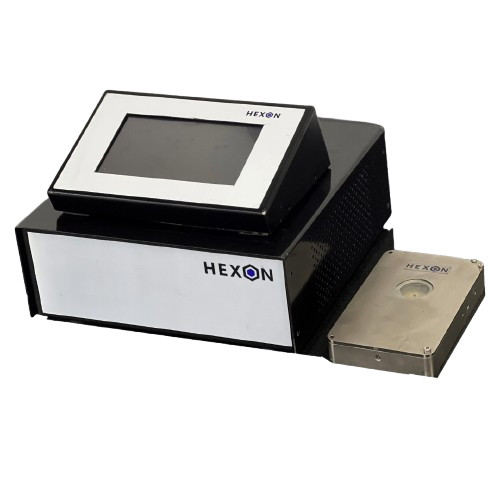
Temperature controllers feature precise heating/cooling ramp control with target temperature settings up to 600°C, allowing researchers to adjust thermal profiles during live observation. Our systems support multi-ramp programming and the ability to pause temperature at any point of the experiment and redefine parameters in real time. Many users appreciate how this simplicity reduces setup time and operator fatigue.
Thermal Behavior Observation with High Accuracy
Custom & OEM Hot Stage Manufacturing Solutions
No two research applications are exactly alike. Some labs require extended temperature ranges. Others need specific sample holders or integration with imaging software. We approach hot stage manufacturing with flexibility in mind.
Custom Hot Stage Manufacturer India
Hot Stage OEM Manufacturer India
Industrial & Laboratory Heating Stage Expertise
As a trusted heating stage manufacturer in India, we design products suitable for both clean laboratory settings and semi-industrial environments. Enclosures, wiring, and insulation are selected to handle extended use without drift or degradation.
Engineers in electronics and materials testing often choose our stages for their predictable behaviour during long heating cycles.
Temperature stability defines research quality. Fluctuations introduce doubt and repeat work. Our heating stages maintain set temperatures with tight tolerance, even during prolonged experiments.
This stability supports studies where data integrity matters, such as regulatory testing or academic publications reviewed by international peers.
Why Choose Hexon as Your Hot Stage Manufacturer
In-House Design & Manufacturing Excellence
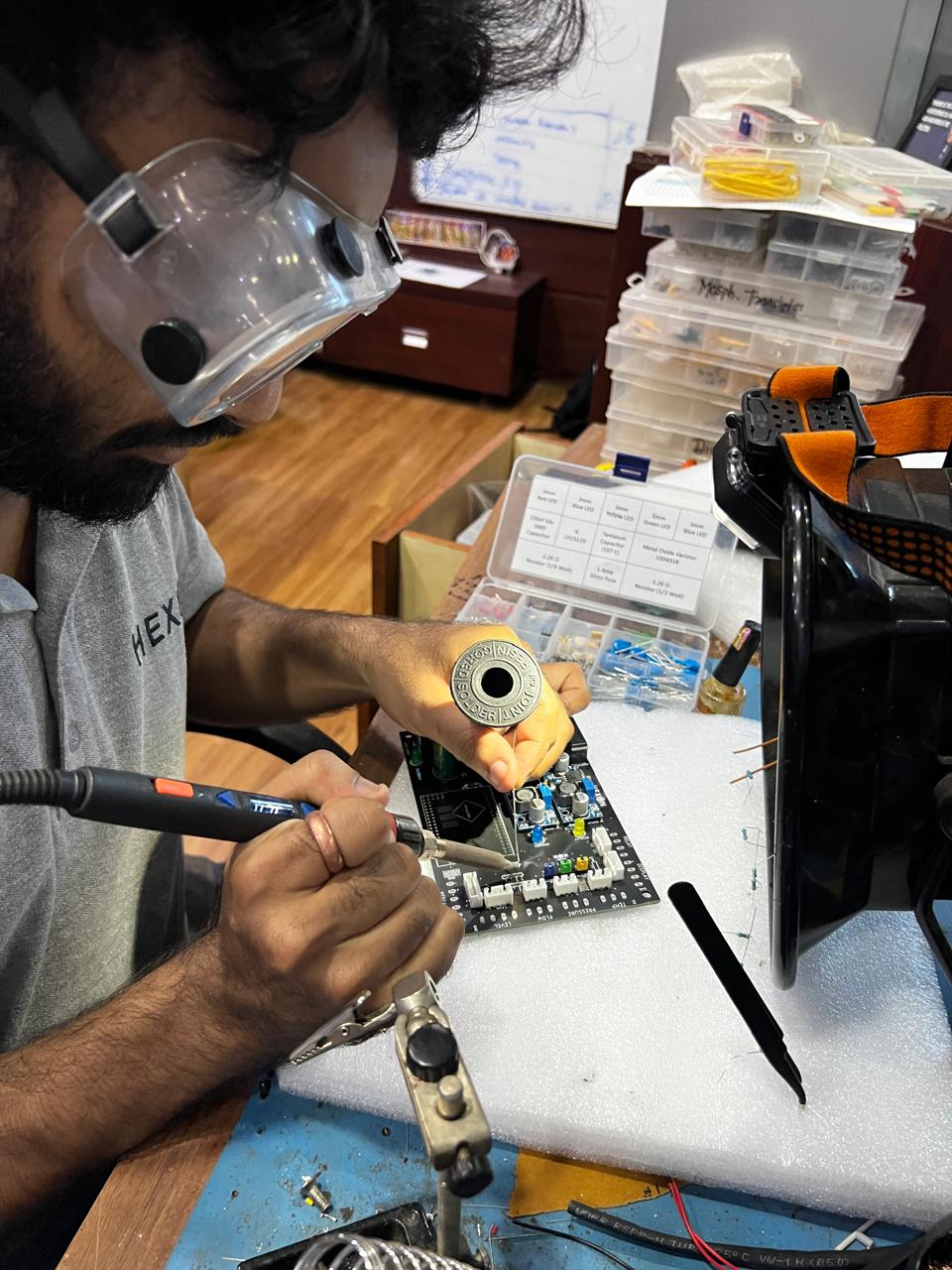
Our design and manufacturing operations are handled in-house at our Navi Mumbai facility. This control allows us to manage tolerances, material selection, and assembly quality without depending heavily on third parties. The company’s financial growth by FY 2023, including a 233 percent increase in profit and a 65 percent rise in net worth, reflects disciplined operations and steady demand. Customers see this stability as a sign that we will continue supporting installed systems well into the future.
After-Sales Support for Precision Instruments
Precision instruments demand careful handling after installation. Our support team assists with setup guidance, calibration advice, and usage queries. Replacement parts and service support are planned with long-term availability in mind. Many customers share that timely responses matter more than marketing promises. We keep communication direct and practical, which helps researchers focus on their work rather than equipment concerns.
Built To Global Standards
Our manufacturing processes and products meet stringent international quality and safety requirements.
Make in India
Proudly manufactured in India with world-class precision
ISO Certified
FDA/EMA/MHRA
GSTIN
Any Kind Of Query Please Contact With Us !
Compliance & Certifications
Meets CFR 21 Part 11 Requirements For Electronic Records And Audit Trails
Ensures Data Integrity For Pharmaceutical R&D, Regulated Labs, And Quality-Controlled Production
Time-Stamps And Logs Every Parameter, Error Event, And Status Change
Complete Audit Trails Extractable For Regulatory Submission
Industry We Serve
Education Institute
Top labs
Pharma companies
Food research
Metal
Mining
Environmental
Petrochemical
Frequently Asked Question
Trusted in more than 100 countries and 4 million customers.
Hot stages are used to study:
- Melting and crystallization
- Phase transitions
- Polymer softening and curing
- Liquid crystal behavior
- Metallurgical transformations
- Thermal stability of materials
Typical ranges:
Basic systems: ambient to ~200–300 °C
Advanced systems: ambient to ~600–1000 °C
Cooling hot stages: down to −10 °C (with cooling systems)
A hot stage uses:
- Electrical resistive heaters (most common)
- Thermocouples or sensors for feedback
- Closed-loop temperature controllers
The system maintains precise temperature at the sample while the microscope observes changes.
Hot stages can be used with:
- Optical light microscopes
- Polarizing microscopes
- Fluorescence microscopes
- Confocal microscopes
Compatibility depends on stage mounting and working distance.
It is the device that:
- Sets temperature profiles (ramps, holds, cycles)
- Monitors real-time temperature
- Ensures stability and safety limits
Heating rate is how fast temperature increases, usually measured in °C/min (degrees Celsius per minute)
Typical ranges:
- 1 °C/min (very precise studies)
- 10–50 °C/min (fast screening)
Even small fluctuations can cause:
- False phase transition readings
- Blurred imaging due to thermal drift
- Inaccurate material characterization
A Peltier hot stage uses thermoelectric cooling/heating modules instead of resistive heating.
Advantages:
- Fast temperature changes
- Precise bidirectional control (heating + cooling)
- Compact design
It is widely used to study:
- Liquid crystals
- Polymer phase transitions
- Crystallization patterns
Polarized light enhances visibility of structural changes.
Yes. Many systems integrate:
- XY scanning for spatial mapping
- Hot stage for temperature variation
- Automated imaging for time + temperature studies
This is common in materials research workflows.
Common sample types:
- Thin films
- Polymer pellets or films
- Crystals and powders
- Liquid crystal droplets
A controlled experiment where temperature is:
- Gradually increased or decreased
- While continuously imaging the sample
Used to identify transition points (melting, crystallization, etc.).
- Uneven heating across sample
- Thermal lag (sample vs sensor mismatch)
- Condensation at low temperatures
- Sample oxidation at high temperatures
- Drift affecting imaging stability
Hot stages include:
- Over-temperature cutoffs
- Sensor redundancy
- Insulated sample holders
- Software temperature limits