
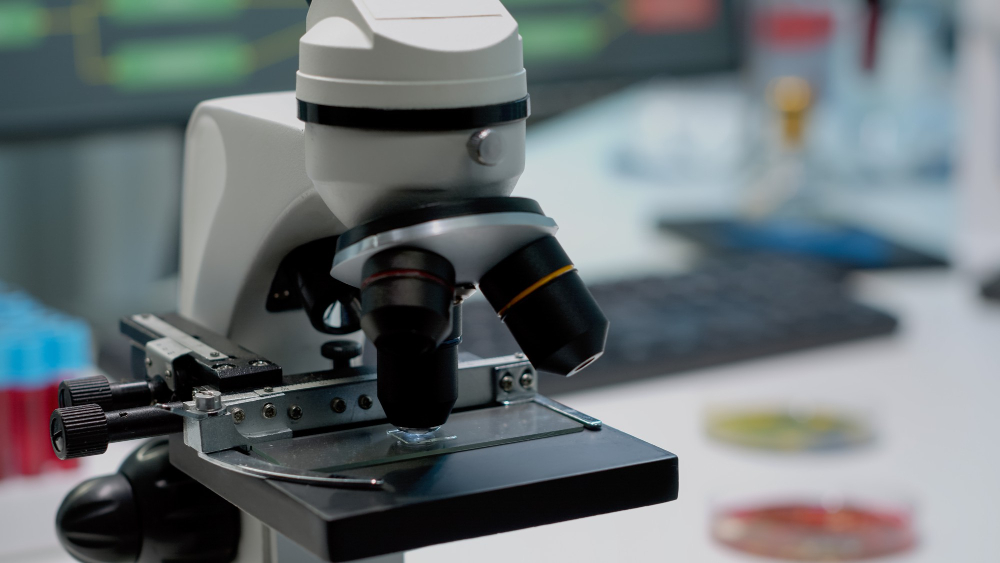
India’s pharmaceutical GMP landscape changed significantly on January 1, 2025. The revised Schedule M of the Drugs and Cosmetics Rules, 1945 came into force, introducing stricter requirements around equipment qualification, process documentation, and analytical traceability across manufacturing and quality control operations. For QC labs using hot stage microscopy (HSM) for polymorphism screening, melting point determination, and solid-state characterisation, that revision created new documentation obligations that many labs are still working to address.
If your lab uses HSM in any stage of product development, formulation QC, or raw material testing, understanding what GMP documentation means for this technique is no longer optional. Regulators, both domestic (CDSCO) and international (US FDA, EMA), increasingly examine how thermal analysis data is generated, controlled, and stored.
What Is Hot Stage Microscopy and Why Does It Matter in Pharma QC?
Hot stage microscopy is a thermal analysis technique that combines optical microscopy with a temperature-controlled stage. The sample is placed on a heated platform that raises or lowers temperature at a controlled rate, while the microscope captures visual changes in real time.
In pharmaceutical applications, HSM is used to:
- Determine melting points and melting ranges for active pharmaceutical ingredients (APIs) and excipients
- Identify polymorphic transitions when one crystal form converts to another during heating
- Detect desolvation events where solvent molecules are expelled from crystal lattices at specific temperatures
- Screen for solid-solid transitions that affect bioavailability and shelf stability
- Assess miscibility between APIs and polymers used in solid dispersions
Unlike differential scanning calorimetry (DSC) or thermogravimetric analysis (TGA), HSM provides a visual record of exactly what happens to the sample at each temperature. That visual record is both scientifically valuable and documentationally significant: it’s observable, recordable, and reproducible in a way that regulators can evaluate directly.
What the Revised Schedule M Requires for Analytical Instruments
The revised Schedule M, effective January 2025 for large pharma manufacturers and phased for medium and small enterprises, introduces requirements that directly affect how instruments like hot stage microscopes are qualified and operated.
Key obligations under the revised guidelines include:
- Equipment qualification: All analytical instruments must be qualified through Installation Qualification (IQ), Operational Qualification (OQ), and Performance Qualification (PQ) protocols before use in GMP testing.
- Calibration records: Temperature-critical instruments must have documented calibration schedules. For a hot stage microscope, this means temperature calibration using certified reference materials at defined intervals.
- Standard Operating Procedures (SOPs): Every analytical method must have a written, version-controlled SOP approved by QA and accessible at the point of use.
- Raw data integrity: All data generated by GMP instruments must be attributable, legible, contemporaneous, original, and accurate, the ALCOA principles. Images, temperature logs, and observations from HSM sessions fall under this requirement.
Hexon Instruments’ Radiant Hot Stage series (RHX125, RHX300, and RHX500) are designed with these documentation requirements in mind, providing temperature control accuracy and data output compatibility that supports GMP-compliant record-keeping.
The GMP Document Set Required for Hot Stage Microscopy
Before a hot stage microscope is used in GMP testing, it must go through formal qualification. The three-stage protocol generates the following documents:
Installation Qualification (IQ): Records that the instrument was installed according to the manufacturer’s specifications. This includes serial numbers, software version, power supply verification, and confirmation that the instrument matches the purchase specification.
Operational Qualification (OQ): Records that the instrument performs within defined operating parameters across its specified range. For a hot stage, this means demonstrating that the heating and cooling rates are accurate and repeatable across the temperature range (for example, from 25°C to 400°C for the Radiant RHX500), and that the temperature display matches calibrated reference values.
Performance Qualification (PQ): Records that the instrument consistently performs within acceptance criteria under actual use conditions. This typically involves repeated analysis of certified reference materials and demonstration of result consistency across multiple operators and sessions.
Calibration Records and Certificates
Temperature calibration is the most critical ongoing documentation obligation for hot stage microscopy. The accepted approach uses certified reference materials with known melting points: substances like benzoic acid (122.4°C), phenacetin (134.5°C), benzanilide (161°C), and caffeine (236.2°C) cover common pharmaceutical temperature ranges.
Calibration must be performed:
- At defined frequency (typically quarterly or semi-annually, based on use frequency and regulatory expectation)
- By trained personnel following an approved calibration SOP
- With results documented in a calibration record that includes the reference material batch number, certified value, observed value, acceptance criteria, and pass/fail outcome
Calibration certificates from the reference material supplier must be retained and traceable to national or international measurement standards (NABL-accredited in India, or traceable to NPL or NIST).
Standard Operating Procedures for HSM Analysis
Every test performed on a GMP instrument needs a written SOP. For hot stage microscopy, the SOP should define:
- Sample preparation: Amount to use, mounting medium if applicable, slide and coverslip handling
- Instrument startup and verification checks before each session
- Heating and cooling rates for the specific analysis type
- Observation criteria: What transitions to look for, how to record the onset and peak of each thermal event
- Acceptance criteria: What temperature ranges are acceptable for the material being tested
- Image capture requirements: When images must be taken, naming convention, storage location
- Out-of-specification (OOS) procedure: Steps to follow if a result falls outside the specification
The SOP must be version-controlled, with change history recorded. All personnel using the instrument must have documented training records tied to the current SOP version.
Run Records and Raw Data Retention
Every GMP HSM session must generate a contemporaneous record. This includes:
- Date, time, analyst name, instrument ID
- Sample identity (material name, batch number, supplier)
- SOP reference and version number used
- Temperature profile applied (start, end, ramp rate)
- Observations recorded in real time (not reconstructed after the fact)
- Images captured, referenced by file name and storage location
- Result and conclusion
- Analyst signature (or electronic equivalent meeting 21 CFR Part 11 or equivalent requirements)
Images captured during the session are considered raw data. They must be stored in a controlled location, protected from alteration, and retained for the period defined by the quality system (commonly 5 years post-batch release for manufacturing QC, or longer for development records).
How Hexon Radiant Hot Stages Support GMP Compliance
The Hexon Radiant RHX series provides the temperature accuracy and control stability that GMP-compliant operation demands. The RHX300, for example, covers a temperature range suited to the majority of pharmaceutical polymorphism and melting point work, with controlled heating rates that can be reproduced reliably across sessions.
For GMP operation, Hexon recommends:
- Documenting the Radiant RHX unit through your site’s IQ/OQ/PQ protocol using the instrument’s technical specifications as the basis for acceptance criteria
- Establishing a calibration schedule using the certified reference materials listed above
- Integrating the HSM SOP into your site quality system with QA approval before first GMP use
Hot stage microscopy is a technically powerful and visually direct characterisation technique that gives Indian pharma QC labs information that DSC and TGA alone cannot provide. Under the revised Schedule M GMP requirements that came into force in January 2025, that power comes with a clear documentation obligation: qualified instruments, calibrated temperature measurement, controlled procedures, and intact raw data records.
Hexon Instruments’ Radiant Hot Stage series provides the thermal precision and technical reliability that makes meeting these obligations straightforward. The documentation framework described in this article is what separates a hot stage microscope used for research from one used for GMP-compliant pharmaceutical analysis.
FAQ
Q1: How often must a hot stage microscope be calibrated in a GMP pharma lab?
Calibration frequency is typically quarterly or semi-annually, defined by your site’s quality system and regulatory expectations.
Q2: What reference materials are used to calibrate a hot stage microscope?
Certified materials like benzoic acid, phenacetin, benzanilide, and caffeine cover most pharmaceutical temperature calibration ranges.
Q3: Do HSM images count as raw data under GMP requirements?
Yes, all images captured during GMP sessions are considered raw data and must be stored, protected, and retained accordingly.